
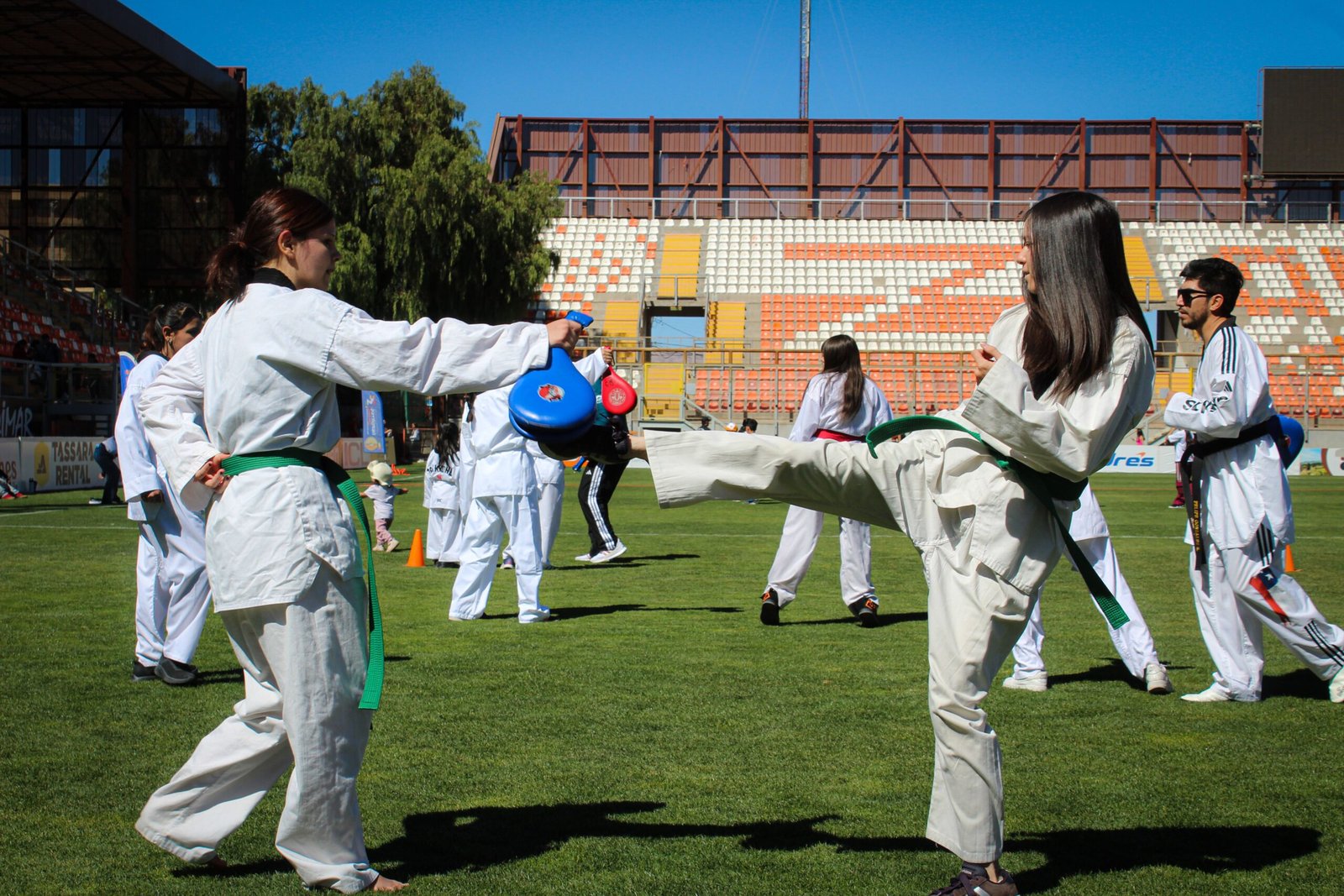
Taekwondo is a Korean martial art and combat sport practiced by millions of people around the world. It is particularly recognized for its dynamic kicking techniques, quick footwork, controlled movements, and disciplined approach to training. However, taekwondo is much broader than the spectacular kicks often seen in competitions. Students also develop balance, flexibility, coordination, physical fitness, concentration, and technical control.
People start taekwondo for many different reasons. Some want a fun way to exercise, while others are interested in martial arts, self-defense, traditional forms, or competitive sport. Children can learn age-appropriate versions of the discipline, while adults can begin as complete beginners. With consistent instruction, students gradually develop skills rather than needing to arrive with athletic experience.
Whether you are considering your first class or simply want to understand the sport better, learning about its history, techniques, belt system, competition formats, and benefits provides a useful introduction to taekwondo.
What Is Taekwondo?
Taekwondo is a Korean martial art whose name is commonly interpreted through three Korean words. “Tae” relates to kicking or striking with the foot, “kwon” relates to the fist or hand, and “do” refers to a way, path, or discipline. The name therefore reflects both physical technique and the broader idea of personal development.
One of the defining characteristics of taekwondo is its emphasis on kicking. Students learn a variety of kicks that require speed, accuracy, balance, flexibility, and control. Depending on the school or organization, training can also include punches, blocks, stances, footwork, forms, partner drills, and sparring.
Modern taekwondo has both traditional and sporting dimensions. Some practitioners focus heavily on forms and technical development, while others concentrate on competitive sparring. Many schools combine several elements.
Taekwondo is also an established international sport. It became an official Olympic sport at the Sydney 2000 Olympic Games after previously appearing as a demonstration sport. Its Olympic presence helped introduce competitive taekwondo to an even larger worldwide audience.
For beginners, one of the most useful things to understand is that taekwondo is progressive. You are not expected to perform advanced spinning or jumping kicks immediately. Training starts with fundamentals and becomes more challenging as technique, strength, coordination, and confidence develop.
The History and Global Development of Taekwondo
The history of modern taekwondo is closely connected to Korea and the development of Korean martial arts during the twentieth century. Various Korean martial arts schools and organizations contributed to the development of the practices that eventually became associated with modern taekwondo.
The martial art developed into an organized discipline with formal techniques, grading systems, competition rules, and international governing organizations. As Korean martial arts expanded internationally, taekwondo schools appeared in countries across Asia, Europe, the Americas, Africa, and Oceania.
International competition became an important part of its development. Organizations established rules and structures for tournaments, forms, athlete development, and international events.
The Olympic pathway was particularly significant. Taekwondo appeared at the 1988 Seoul Olympics and the 1992 Barcelona Olympics as a demonstration sport before becoming an official Olympic sport in 2000.
Today, taekwondo exists in many forms. Competitive athletes can train toward major international tournaments, while recreational practitioners may attend classes primarily for exercise, discipline, social interaction, and personal development.
This combination of tradition and modern sport helps explain the martial art’s broad appeal. Someone can practice taekwondo without ever entering a tournament, while another student can build a long-term competitive career around it.
Basic Taekwondo Techniques and Skills
Learning taekwondo begins with fundamental movements. Advanced techniques may look spectacular, but they depend on basic skills that students repeatedly practice.
Front Kick
The front kick is one of the fundamental kicks beginners may learn. The practitioner lifts the knee, extends the lower leg toward the target, and returns to a stable position. Proper technique involves balance, control, and coordinated movement.
Roundhouse Kick
The roundhouse kick is one of the most recognizable taekwondo techniques. It involves rotation of the body and hip while the lower leg moves toward the target. Developing an effective roundhouse kick requires timing and balance as well as flexibility.
Side Kick
A side kick uses a sideways body position and can generate significant power when performed correctly. Students need to learn how to chamber the leg, rotate the body, extend the foot, and recover safely.
Back Kick
The back kick involves turning the body and extending the leg backward toward the target. Because the practitioner may temporarily lose direct visual contact with the target, control and spatial awareness are especially important.
Blocks and Hand Techniques
Although kicking is strongly associated with taekwondo, hand techniques also form part of training. Students may practice punches, blocks, defensive movements, and combinations.
Footwork
Footwork is often underestimated by beginners. Effective movement helps a practitioner maintain balance, manage distance, create opportunities, and respond to an opponent.
The goal is not simply to perform techniques quickly. Good taekwondo emphasizes proper mechanics and controlled movement. Speed and power become more useful when they are supported by sound technique.
Poomsae and Kyorugi Explained
Two important words that beginners encounter are poomsae and kyorugi.
Poomsae refers to structured patterns of movement. A practitioner performs a predetermined sequence that combines stances, blocks, strikes, kicks, and other techniques. Poomsae requires memory, concentration, balance, coordination, and technical accuracy.
Forms can be practiced individually and can also be part of formal competition. Students often repeat the same patterns many times so that movements become increasingly controlled and consistent.
Kyorugi refers to sparring. In competitive taekwondo, two athletes face each other under established rules. Competitors attempt to score using permitted techniques while observing restrictions concerning legal targets, contact, equipment, and conduct.
Sparring requires a different set of skills from forms. Athletes need to understand distance, timing, movement, reactions, and strategy while maintaining control.
Not every student needs to become a competitive sparring athlete. Some people enjoy forms more, while others prefer the fast pace of sparring. A well-rounded taekwondo program can expose students to both areas before they decide what they enjoy most.
Taekwondo Belts and Student Progress
The belt system gives students a structured way to measure progress. Exact belt colors and grading requirements vary between schools and organizations, but many systems begin with a white belt and progress through several colored belts before reaching black belt levels.
A typical progression may include colors such as white, yellow, green, blue, and red, followed by black belt grades. However, students should always check the specific system used by their school because there is no single universal grading sequence.
Promotion usually involves demonstrating skills rather than simply attending classes. Depending on the organization, a grading test can involve basic techniques, forms, physical conditioning, knowledge, sparring, and other requirements.
The belt system can be motivating because it gives students short-term goals. Instead of thinking only about an eventual black belt, a beginner can focus on learning the techniques required for the next grade.
Black belt should not be considered the end of learning. It generally represents the beginning of more advanced study. Senior students continue refining fundamentals, learning advanced forms, developing teaching skills, and improving their understanding of the martial art.
The most valuable progress is often not visible as a belt color. Better balance, cleaner technique, improved discipline, and greater control are all meaningful signs of development.
Physical and Mental Benefits of Taekwondo
Taekwondo can provide a varied form of physical activity because classes often combine movement, technique practice, conditioning, stretching, and partner work.
Fitness and Endurance
Repeated kicking drills, footwork, forms, and sparring can provide cardiovascular exercise. Training intensity varies by class and individual ability, but regular participation can contribute to overall physical fitness.
Balance and Coordination
Many techniques require the practitioner to control the body while standing on one leg or changing direction quickly. Repeated practice can challenge balance and coordination.
Flexibility
Kicking techniques can encourage students to work on mobility and flexibility, particularly around the hips and legs. Flexibility develops gradually, and beginners should avoid forcing their range of motion.
Strength
Bodyweight exercises, kicking drills, repeated movements, and conditioning can help develop muscular endurance and functional strength.
Concentration
Remembering forms and following technical instructions requires attention. Students learn to focus on details such as stance, hand position, foot placement, breathing, and timing.
Discipline
Martial arts require repetition. A technique may need to be practiced hundreds of times before it feels natural. This process can teach students the value of consistency and patience.
Confidence
Progressing from one skill to another can provide a sense of achievement. Confidence in martial arts is generally built through practice and demonstrated ability rather than simply through encouragement.
These benefits vary between individuals, and taekwondo should complement other healthy habits such as adequate sleep, balanced nutrition, and appropriate recovery.
What Happens in a Taekwondo Class?
A beginner class usually follows a structured routine, although the exact format varies by school.
A typical session may begin with a warm-up. Students might perform light cardiovascular movements, mobility exercises, and dynamic stretches before practicing martial arts techniques.
The instructor may then introduce basic skills. Beginners often work on stances, footwork, blocks, punches, and simple kicks. More experienced students may practice combinations or advanced movements.
Pad work can be included to help students practice accuracy, timing, and controlled power. Poomsae practice may follow, particularly in classes that emphasize forms.
Depending on age and experience, students may participate in partner drills or controlled sparring. Protective equipment and appropriate supervision are particularly important when students practice contact-based activities.
Classes often finish with conditioning and stretching.
A good beginner class should provide clear instruction and allow students to progress gradually. New students should not feel pressured to perform techniques that exceed their current ability.
When choosing a school, consider the instructor’s experience, the class structure, the training environment, safety practices, cost, location, and whether the schedule fits your routine.
Frequently Asked Questions About Taekwondo
Is taekwondo difficult for beginners?
It can be challenging, but beginners are normally introduced to techniques progressively. You do not need advanced flexibility, strength, or martial arts experience before your first class.
Is taekwondo mainly about kicking?
Kicking is a major feature, but taekwondo also includes punches, blocks, stances, footwork, forms, conditioning, and sparring. The balance depends on the training program.
Can children learn taekwondo?
Yes. Many martial arts schools offer programs designed for children. Training should be appropriate for the child’s age, ability, and physical development.
Can adults start taekwondo?
Absolutely. Adults can begin as complete beginners. A suitable class can introduce fundamental movements while allowing students to progress at an appropriate pace.
How long does it take to earn a black belt?
There is no universal timetable. Progress depends on the school’s grading requirements, training frequency, individual performance, and other factors. The exact requirements should be discussed with the instructor.
Is taekwondo good for fitness?
Taekwondo can provide cardiovascular exercise while challenging balance, coordination, mobility, muscular endurance, and overall movement skills. Training intensity varies from class to class.
What should I wear to my first taekwondo class?
A beginner can usually wear comfortable athletic clothing unless the school has specific requirements. Once enrolled, students may be expected to purchase a taekwondo uniform, commonly called a dobok.
Does taekwondo teach self-defense?
Taekwondo develops physical skills, awareness, movement, and controlled martial arts techniques. However, sport competition and practical self-defense are not identical. Anyone specifically interested in self-defense should ask a school what its curriculum covers.
Final Thoughts on Taekwondo
Taekwondo combines martial arts technique, physical activity, discipline, and organized sport. Its famous kicks are only one part of a much larger system that includes footwork, balance, forms, hand techniques, conditioning, and controlled sparring.
For beginners, the most important step is finding an appropriate instructor and learning the fundamentals patiently. You do not need to arrive at your first class with exceptional flexibility or athletic ability. Those qualities can develop through consistent training.
Whether your goal is fitness, competition, personal development, martial arts training, or simply trying something new, taekwondo offers a structured way to stay active and learn a challenging skill. Progress comes through repetition, attention to technique, and a willingness to keep practicing when movements do not initially feel natural.
The best approach is to focus on steady improvement rather than rushing through the belt system. Every successful kick, cleaner stance, improved form, and better-controlled movement represents another step in learning taekwondo.





Leave a Reply