
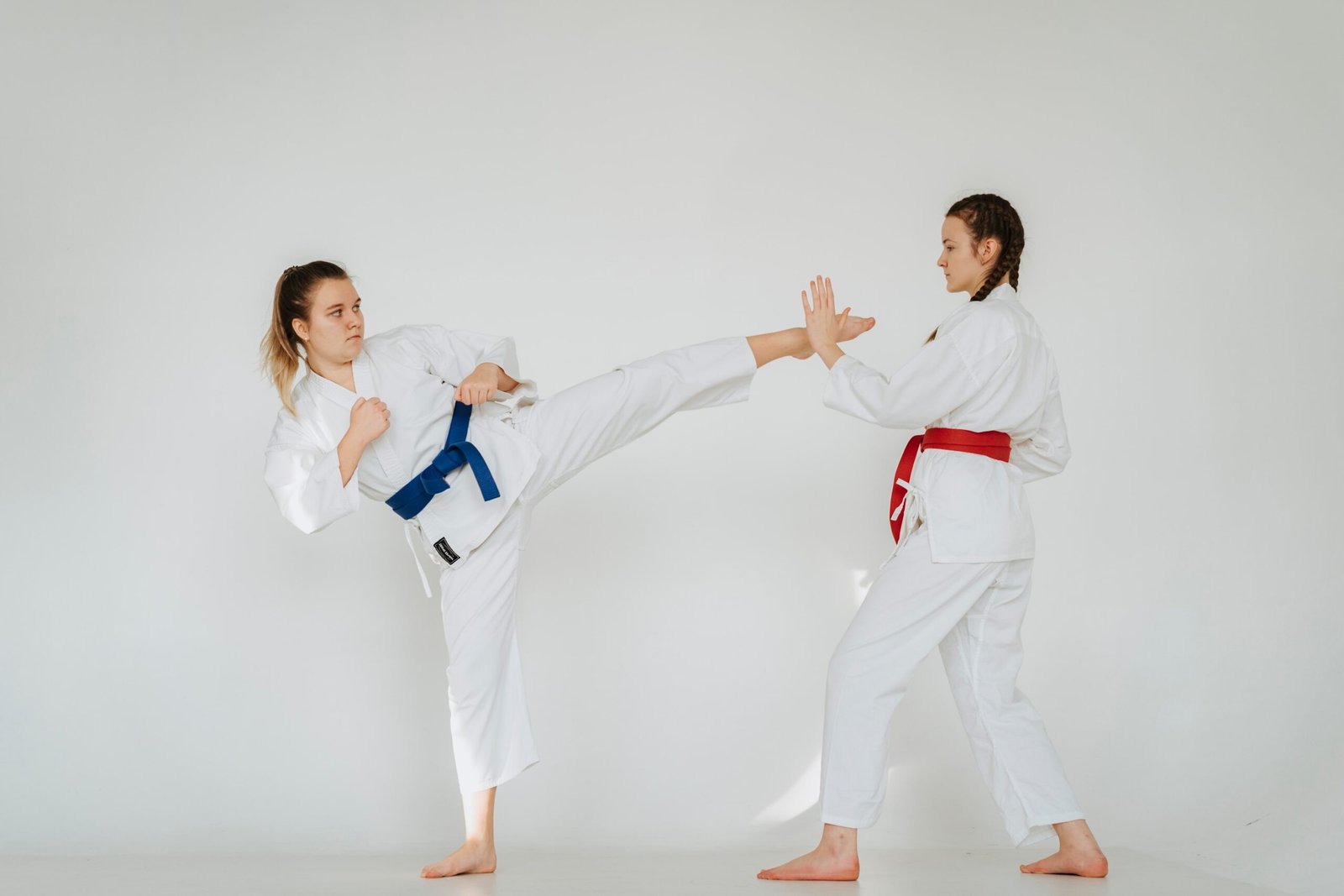
Taekwondo is a Korean martial art known around the world for its fast kicks, controlled movements, discipline, and competitive fighting. It can be practiced as a traditional martial art, a recreational activity, a method of physical training, or a competitive sport. Its modern international development has also made it one of the best-known martial arts in the Olympic movement.
For beginners, however, taekwondo can seem complicated at first. There are unfamiliar Korean terms, different belt colors, patterns to learn, sparring rules to understand, and techniques that require flexibility and coordination. Understanding the basic structure makes the discipline much easier to appreciate.
World Taekwondo describes taekwondo as a Korean martial art that has developed into a global sport. The organization was founded in 1973, and taekwondo became an official Olympic sport at the Sydney 2000 Games after appearing as a demonstration sport at earlier Olympics.
Whether you are considering your first class, researching the history of the martial art, or simply want to understand why taekwondo is so popular, this guide explains the essential points in clear language.
What Is Taekwondo?
Taekwondo is a Korean martial art and combat sport that places particular emphasis on kicking techniques, movement, timing, balance, and controlled striking. Although kicks are its most recognizable feature, training involves much more than simply learning how to kick.
A typical taekwondo program can include stretching, basic stances, footwork, punches, blocks, kicks, combinations, forms, partner drills, sparring, and physical conditioning. The exact balance depends on the school, instructor, governing organization, and whether students are training primarily for traditional practice or competition.
The word is commonly explained through Korean components associated with foot, fist, and way or discipline. This reflects the broader idea of taekwondo as a disciplined method of training the body and mind rather than simply a collection of fighting techniques.
World Taekwondo’s statutes describe the discipline as a Korean martial art that aims to develop the body, mind, and spirit and note that it has evolved into a sport practiced internationally.
One of the distinctive characteristics of taekwondo is its emphasis on dynamic kicking. Students may eventually learn front kicks, roundhouse kicks, side kicks, back kicks, spinning techniques, jumping kicks, and combinations that connect several movements.
At the same time, good instruction places significant attention on control. The goal of training is not simply to produce the hardest possible strike. Students must learn distance, accuracy, balance, timing, defensive awareness, and how to perform techniques safely.
The History and Development of Taekwondo
The history of taekwondo is often presented as a simple story, but its development is more complex. Modern taekwondo emerged in Korea through the development and consolidation of martial arts schools during the twentieth century, while its broader historical narrative connects it with earlier Korean martial traditions.
World Taekwondo’s official statutes describe taekwondo as a Korean martial art with origins that can be traced back thousands of years.
Modern international taekwondo developed rapidly during the twentieth century. The World Taekwondo organization was founded in 1973 to promote and develop the discipline internationally. It subsequently gained recognition within the Olympic movement.
Taekwondo appeared as a demonstration sport at the 1988 Seoul Olympics and again at the 1992 Barcelona Olympics. It became a full Olympic sport beginning with the 2000 Sydney Games.
That transition was important because it changed how millions of people encountered the martial art. Instead of being known primarily through martial arts schools and national organizations, taekwondo became visible to a worldwide sporting audience.
The discipline also expanded beyond Olympic competition. World Taekwondo now oversees international championships and competitions involving different age groups and formats, including Poomsae and Para Taekwondo events. Its official event framework includes World Championships, Grand Prix competitions, junior and cadet championships, Poomsae competitions, club events, and other international tournaments.
This history helps explain why modern taekwondo can look different from one school to another. Traditional instruction, recreational training, forms-based practice, and Olympic-style sparring may share the same foundation while placing different emphasis on particular skills.
Taekwondo Techniques and Basic Skills
Taekwondo is particularly famous for kicking, but beginners normally develop several categories of skills.
Stances provide the foundation for balance and movement. A stable stance allows a student to generate force while remaining prepared to move or defend.
Footwork is equally important. A technically impressive kick is difficult to use effectively if the practitioner cannot control distance or recover safely after the movement.
Punches are included in many forms of taekwondo. Straight punches and other hand techniques help students understand coordination and close-range striking.
Blocks and defensive movements teach students how to protect themselves and manage attacks during drills and sparring.
Kicks form the most recognizable part of the discipline. Common examples include:
- Front kick
- Roundhouse kick
- Side kick
- Back kick
- Hook kick
- Axe kick
- Spinning kicks
- Jumping kicks
Each technique has different applications and requires a combination of balance, flexibility, hip movement, posture, and timing.
Beginners should not expect advanced kicks to look perfect immediately. Flexibility and coordination develop gradually. Trying to force high kicks before the supporting muscles and joints are ready can create unnecessary strain.
A qualified instructor can help students develop kicking height progressively while maintaining good technique.
Taekwondo Belts and Ranking System
Belts are one of the most recognizable parts of taekwondo. They provide students with a visible way to track progress through a structured curriculum.
The exact belt sequence differs between schools and organizations, so there is no single universal color system that applies identically everywhere. Many schools use a progression beginning with white and moving through several colored belts before reaching black belt.
A common progression may include:
- White
- Yellow
- Green
- Blue
- Red
- Black
Some organizations divide these levels into additional grades, often called geup, kup, or another local terminology. Students may therefore have several stages between the major belt colors.
Black belt also represents a progression rather than a final destination. Advanced practitioners can continue through multiple Dan grades, depending on the governing organization.
World Taekwondo’s competition rules recognize Dan or Poom certification issued by Kukkiwon as one of the qualifications relevant to certain recognized competitions.
It is important to understand that belt promotion should not be viewed only as a test of fighting ability. Depending on the school, grading can assess forms, basic techniques, flexibility, terminology, physical conditioning, sparring, discipline, and knowledge of the school’s curriculum.
The belt system therefore gives students goals to work toward while encouraging regular practice.
Taekwondo Sparring and Competition Rules
Competitive taekwondo is different from ordinary training. Students learning martial arts may practice techniques against pads or participate in controlled drills long before they enter an actual competition.
In World Taekwondo competition, athletes compete within regulated weight categories and use protective equipment. The official competition rules specify equipment such as a chest protector, head protector, groin guard, forearm and shin guards, gloves, sensing socks when applicable, and a mouthguard.
The objective is to score through permitted techniques delivered to legal scoring areas while following the competition rules.
Modern competition also uses electronic scoring technology in many events. This has changed the tactical side of the sport because athletes must combine accurate technique with timing and movement.
Competitive taekwondo places considerable importance on distance management. Fighters constantly adjust their position, looking for opportunities to attack while avoiding their opponent’s techniques.
Kicks to the body and head can play an important role, while certain techniques and scoring circumstances can carry different values. Exact scoring systems and penalties can change as governing bodies update their rules, so athletes competing seriously should always train under the current rules used by their federation.
World Taekwondo maintains official competition rules and event regulations for its recognized international competitions.
What Are the Benefits of Taekwondo?
Taekwondo can provide a combination of physical training, technical learning, and structured discipline.
One obvious benefit is physical fitness. Classes can involve repeated kicking, footwork, jumping, stretching, bodyweight exercises, and partner drills. Over time, regular practice can contribute to cardiovascular fitness, muscular endurance, coordination, and mobility.
Flexibility is another important part of training. Many techniques require controlled movement through a substantial range of motion. Regular stretching under appropriate instruction can help students gradually improve their mobility.
Balance and coordination also receive constant attention. Standing on one leg while performing a kick requires control of the hips, core, supporting leg, and upper body.
There is also a strong mental component. Students must remember combinations, respond to instructions, correct mistakes, and continue practicing techniques that may initially feel uncomfortable or unfamiliar.
For children, martial arts classes can provide a structured environment where they practice listening, following instructions, working with partners, and progressing through achievable goals. The experience varies considerably according to the instructor and school, so parents should visit a class and assess the teaching environment before enrolling a child.
Taekwondo can also be socially rewarding. Training places people of different ages and experience levels in the same environment, giving students opportunities to practice together and support each other’s development.
These benefits do not require someone to become a competitive fighter. Recreational students can train for fitness, skill development, personal interest, or enjoyment without entering tournaments.
How to Start Taekwondo Training
Starting taekwondo does not require advanced flexibility or previous martial arts experience. Beginners normally learn fundamental movements before progressing to more complicated techniques.
The first step is finding a reputable school with qualified instructors and a training environment appropriate for your age and goals.
When comparing schools, consider:
Instructor experience: Ask about the instructor’s qualifications, teaching experience, and governing organization.
Class structure: Find out whether beginners have dedicated sessions or train alongside more advanced students.
Safety procedures: Ask how sparring is supervised and what protective equipment is required.
Training goals: Some schools emphasize competition, while others focus more on traditional martial arts, forms, fitness, or recreational training.
Class atmosphere: A respectful training environment is important. Students should be encouraged to improve without unnecessary intimidation.
Progression: Ask how grading works and how frequently students are eligible for belt examinations.
Beginners should also bring realistic expectations. Flexibility does not appear overnight, and advanced kicks take time to develop. A student who attends consistently and focuses on sound technique will generally have a more productive experience than someone who tries to rush through the basics.
A good instructor should be able to modify exercises when necessary and explain how to practice safely.
Taekwondo Safety and Training Tips
Like other physical sports and martial arts, taekwondo carries some risk of injury. Kicking, jumping, falling, and sparring place physical demands on the body, particularly when techniques are performed without adequate preparation or control.
Warm-ups and gradual progression are therefore important.
Students should listen to their instructor and avoid treating pain as something that must simply be ignored. Normal training fatigue is different from sharp or persistent pain.
Protective equipment becomes particularly important during sparring. World Taekwondo’s competition rules specify approved protective equipment and require competitors to wear appropriate protection before entering the field of play.
Beginners should also avoid practicing advanced spinning or jumping techniques without proper supervision. These techniques require more balance and spatial awareness than basic kicks.
Hydration, appropriate clothing, suitable footwear for the training environment, and adequate recovery can also support consistent practice.
Perhaps the most important safety principle is control. Martial arts training should teach practitioners to control their movements rather than simply generate maximum force.
Frequently Asked Questions About Taekwondo
What does taekwondo mean?
Taekwondo is a Korean martial art whose name is commonly explained through concepts associated with foot, fist, and way or discipline. It combines striking techniques, movement, training discipline, and physical development.
Is taekwondo a martial art or a sport?
It is both. Taekwondo originated as a Korean martial art and has developed into an international competitive sport. World Taekwondo governs a major international sporting format, while many schools also teach traditional and recreational forms of practice.
Is taekwondo an Olympic sport?
Yes. Taekwondo was a demonstration sport at the 1988 Seoul and 1992 Barcelona Olympics and became an official Olympic sport at the 2000 Sydney Games.
Is taekwondo good for beginners?
Yes. Beginners can start without previous martial arts experience. Training normally progresses from basic movements to more advanced techniques, forms, and sparring.
How long does it take to earn a black belt?
There is no universal timeframe. It depends on the school, grading requirements, attendance, training frequency, ability, and governing organization. Students should ask their specific school about its progression system.
Is taekwondo mostly about kicking?
Kicking is a major feature, but taekwondo also includes punches, blocks, footwork, stances, forms, conditioning, and controlled sparring.
What equipment do taekwondo students need?
Beginners often start with a uniform and basic training equipment. Students who participate in sparring may need additional protective equipment. Competitive World Taekwondo athletes must use approved protective equipment specified by the competition rules.
Can children learn taekwondo?
Yes. Many martial arts schools offer children’s classes. Parents should choose an instructor experienced in teaching children and check the school’s safeguarding and safety procedures.
Final Thoughts
Taekwondo combines martial arts tradition, athletic training, technical skill, and competitive sport. Its most recognizable feature is its dynamic kicking, but successful practice also depends on balance, timing, footwork, flexibility, concentration, discipline, and control.
Its international development has been remarkable. World Taekwondo was established in 1973, the discipline appeared as an Olympic demonstration sport in 1988 and 1992, and it became an official Olympic sport at Sydney 2000. Para Taekwondo later became an official Paralympic sport beginning with Tokyo 2020.
For someone considering learning taekwondo, the best starting point is not trying to imitate advanced kicks immediately. Begin with a reputable instructor, learn the fundamentals, develop flexibility gradually, and build technique through consistent practice.
Whether your goal is fitness, traditional martial arts training, competition, or simply learning something new, taekwondo offers a structured path where progress comes through repetition and patience. The belt may show where you are in the curriculum, but the more meaningful development comes from the skills, discipline, coordination, and confidence built through regular training.







Leave a Reply